English
 Português
 Español
 Français
Freedom is easy to enjoy and just as easy to forget.

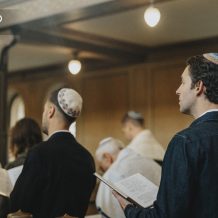
Most Americans wake up each morning to liberties so familiar that we scarcely notice them. We can gather for worship, open the Bible in our homes, teach our children biblical truth, speak according to our conscience, and share the Gospel in public life — all without fear.
While these freedoms feel normal to us, they are an exception both around the world and throughout human history.
Because freedom is such a precious gift, American Christians should value it and understand the history that secured it. We study history not out of nostalgia for a bygone era, but to know what we have been given. Memory is a part of stewardship. When a people forget what has been entrusted to them, they lose the wisdom and gratitude necessary to preserve it.
Scripture repeatedly calls God’s people to remember. Moses recounted Israel’s history before they entered the Promised Land. Joshua reminded the people of God’s faithfulness before calling them to renewed obedience. As the psalmist wrote, “I will remember the works of the Lord; surely I will remember thy wonders of old” (Psalm 77:11). Remembering is not primarily for nostalgia, but a motivation for faithfulness.
The same is true for the freedoms we have inherited as Americans. We must remember where they came from, what they cost, and why they matter.
Our nation’s story started with men and women who understood that liberty of conscience is precious. The Pilgrims crossed the Atlantic because they desired the freedom to worship God. Their journey was difficult, their first winter devastating, and their survival uncertain. Yet before they even stepped ashore, they signed the Mayflower Compact, acknowledging God and binding themselves together for the good of their colony. In that moment, they reflected a truth that would become foundational to America: freedom requires order, and order requires accountability before God.
Generations later, the American colonies were stirred by the preaching of the Great Awakening. Jonathan Edwards, George Whitefield, and many others proclaimed the necessity of personal faith in Christ. Their preaching reminded hearers that every soul stands accountable before God. That spiritual awakening shaped the conscience of a people who would think deeply about liberty, authority, and responsibility.
By the time of America’s founding, a conviction had taken root: rights do not originate with government but are given by God. The Declaration of Independence expressed this truth clearly when it stated that all men are “endowed by their Creator” with unalienable rights. That statement remains one of the most consequential ideas in human history.
If rights come from government, the government may redefine or remove them. But if rights come from God, the government is accountable to protect them.
This is why knowing our history matters. It reminds us that freedom is not self-sustaining. Liberty must be grounded in truth, guarded by virtue, and passed on with intention.
Ronald Reagan famously warned that freedom is fragile:
Freedom is never more than one generation away from extinction. We didn’t pass it on to our children in the bloodstream. It must be fought for, protected, and handed on for them to do the same.
That warning is as relevant now as when he first gave it.
For Christians, this responsibility is especially significant. We value religious liberty not merely because it allows us to live comfortably, but because it gives us the opportunity to obey Christ openly. We can preach the Gospel, send missionaries, train our children, plant churches, disciple believers, share biblical truth, and serve our neighbors in the name of Christ.
Freedom is not simply a privilege to enjoy. It is a stewardship to use.
The question, then, is not only whether we appreciate our freedoms, but whether we are using them faithfully. Are we praying for our nation? Are we proclaiming the Gospel while we have the liberty to do so? Are we teaching the next generation that freedom is precious because it allows us to do what is right before God?
A forgetful people will become an ungrateful people. And an ungrateful people will eventually become careless with what they have received.
But a people who remember rightly will live differently. They will give thanks. They will pray with humility. They will teach with conviction. They will serve with purpose. They will understand that the blessings they enjoy were entrusted to them, not merely for their own benefit, but for the good of others and the glory of God.
This is the kind of patriotism Christians should cultivate — not a shallow sentiment, but a grateful stewardship. It is not a faith in politics, but a recognition that God has given us unusual freedoms and that we are responsible for using them well.
Our ultimate hope is not in America; it is in Christ. But while God has placed us here, in this nation, at this moment, we should seek the good of our country (Jeremiah 29:7) and use every freedom we have for the cause of Christ (Galatians 5:13).
Freedom is too precious to forget, and history is too important to neglect.